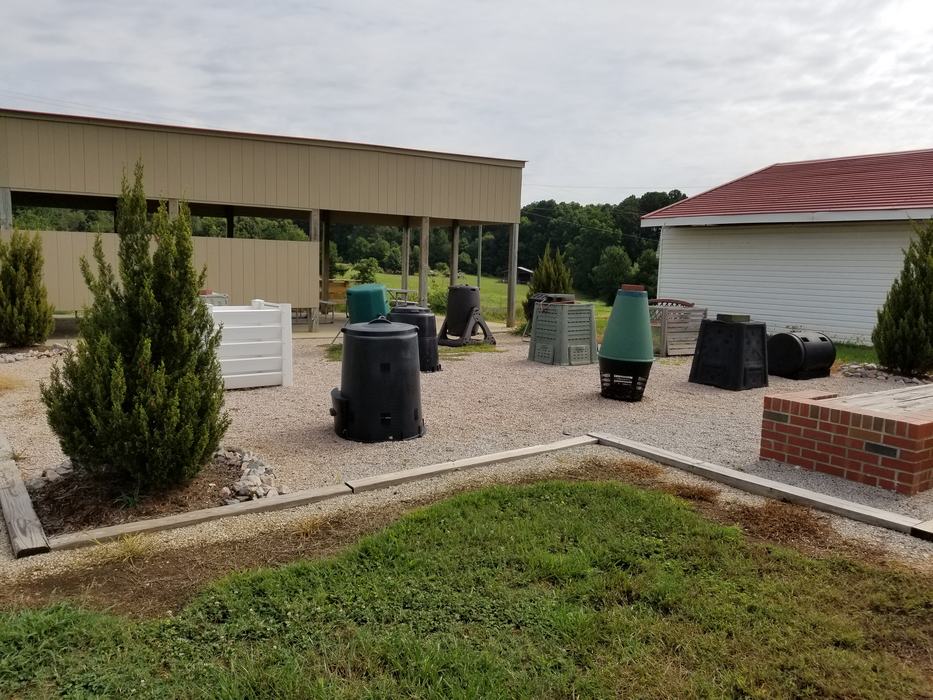
The NC State Compost Learning Lab (CL2) is an education, research, and demonstration site in the heart of the 1,500-acre Lake Wheeler Road Field Laboratory in Raleigh, North Carolina. The site has 25 types of backyard composting and vermicomposting units, both medium and small scale, and areas for hands-on training activities. A 40-ft by 30-ft Worm Barn houses a dozen types of worm bins ranging in size from household bins to a 32 square feet continuous flow-through raised bed. A rain garden captures run-off from the roof.
If you want to visit:
- You must make an appointment. Email the Wake County Extension Master Gardener volunteers to arrange a visit
- Only adults 18 or older are allowed at the site
- Smoking is prohibited
- No pets are allowed
- No toilets or garbage service on site
- Must wear a mask inside the Worm Barn (bring your own)
- Recommend wearing closed-toe shoes
Courses and Workshops
Hands-on training courses are offered periodically about composting and vermicomposting, from small to large scale. Class attendees include extension educators, recycling coordinators, farmers, entrepreneurs, the general public, teachers, Master Gardeners, composting facility operators, and food service managers.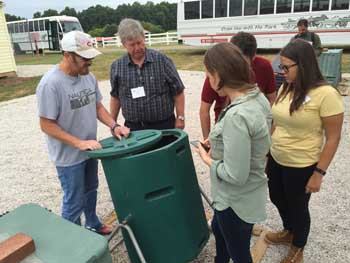
People from all over the world visit the site to learn about composting and vermicomposting. This includes attendees of the annual Vermiculture Conference, an annual training on large-scale vermicomposting. Speakers and participants from around the globe spend two days discussing worm farming methods.
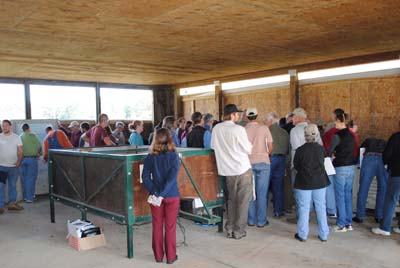
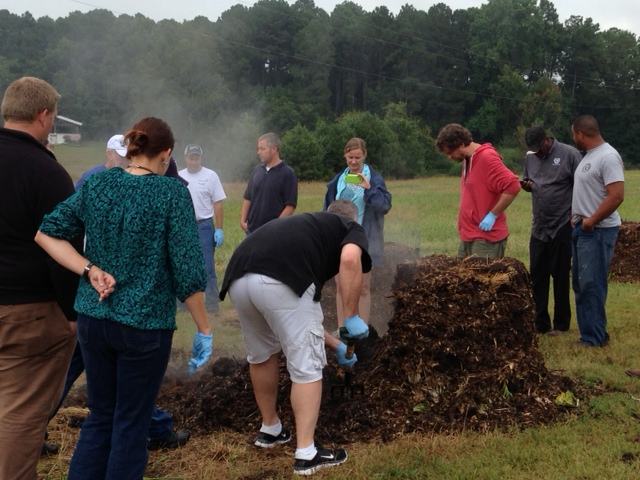
A five-day training course on large-scale composting is offered yearly by the USCC-NC Composting Council. The training is for public and private composting operators, farmers, recycling specialists, extension educators, and other governmental agency personnel. Topics include the biological and physical processes of composting, developing feedstock mixes, site selection and preparation, odor control, and marketing.
Factsheets on composting, vermicomposting, recycling, and other waste reduction topics may be accessed from Rhonda Sherman. Check out her new book on vermicomposting!